July 8, 20265 min read
Creatine monohydrate: the complete beginner’s guide
Creatine is the most researched sports supplement in existence. How it works, how much to take, and the myths you can safely ignore.
What creatine actually does
Creatine is a compound your body makes and stores in muscle as phosphocreatine — a rapid energy reserve for short, intense efforts. Supplementing tops up those stores.
The effect is one of the best documented in sports nutrition: creatine increases physical performance in successive bursts of short-term, high-intensity exercise — think sets of squats, sprints or heavy presses.
How much, and when
The effective daily dose is 3 g. Taken every day, muscle stores saturate in three to four weeks; a loading phase is possible but unnecessary.
Timing barely matters — before or after training, or with breakfast on rest days. What matters is taking it every day, which is why unflavoured powder stirred into any shake is the classic choice.
Myths worth retiring
Creatine is not a steroid, does not damage healthy kidneys at recommended doses, and is not just for bodybuilders — endurance athletes and older adults use it too.
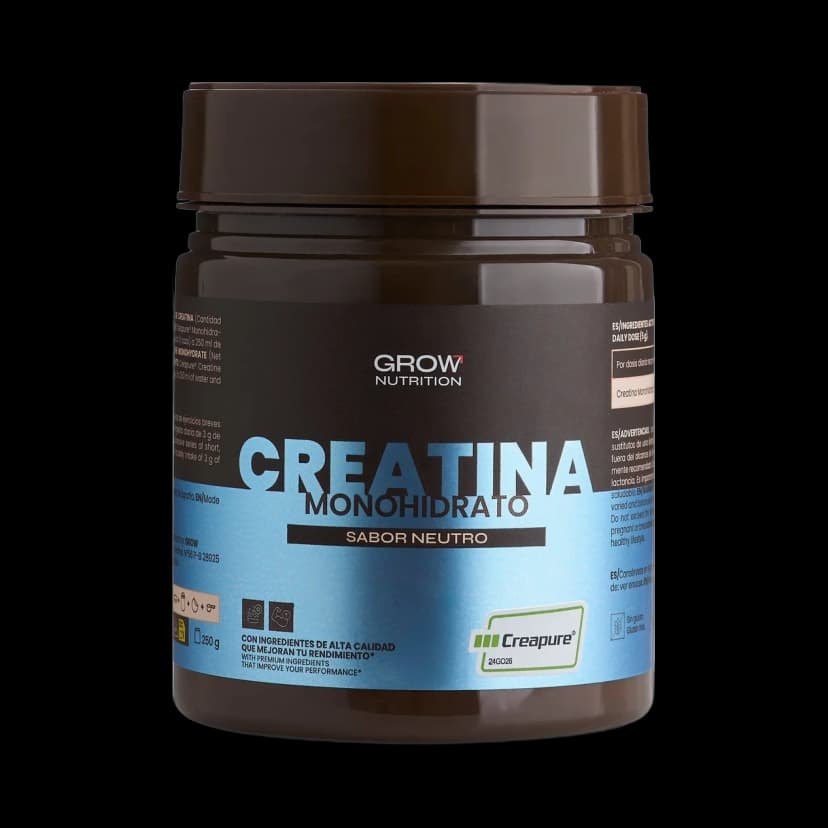
Quality does differ: Creapure® is the German-made benchmark for purity, which is exactly what our GrowNutritions Creatine uses.
Frequently asked questions
- How much creatine should I take per day?
- 3 g per day is the standard effective dose. Consistency every day matters more than timing around workouts.
- Do I need to cycle creatine?
- No. Research supports continuous daily use; cycling offers no proven advantage.
- Does creatine cause water retention?
- Creatine draws water into the muscle cell itself, which is part of how it works. It is intracellular water, not bloating under the skin.