July 8, 20264 min read
Antioxidants and oxidative stress, explained simply
Free radicals, oxidative stress, antioxidants — the words are everywhere. Here is what they actually mean and how diet and supplements fit in.
Oxidative stress in plain words
Your cells produce unstable molecules called free radicals as a normal by-product of making energy. Stress, intense exercise, UV light and pollution add more.
When free radicals outnumber your defences, the imbalance is called oxidative stress — a normal process your body is built to manage, as long as the balance holds.
Where antioxidants come in
Antioxidants are molecules that neutralise free radicals. Your body makes some of its own and gets the rest from food: vitamin C and E, zinc, selenium and plant compounds such as lycopene — the red pigment in tomatoes.
A colourful, plant-rich diet is the foundation. A supplement can be a practical complement when your routine needs support.
What to look for in a supplement
There are two honest approaches: complexes that isolate specific actives with recognised EU claims — such as vitamin C, which contributes to protecting cells from oxidative stress — and whole-food complexes that concentrate a wide range of fruits, vegetables and berries.
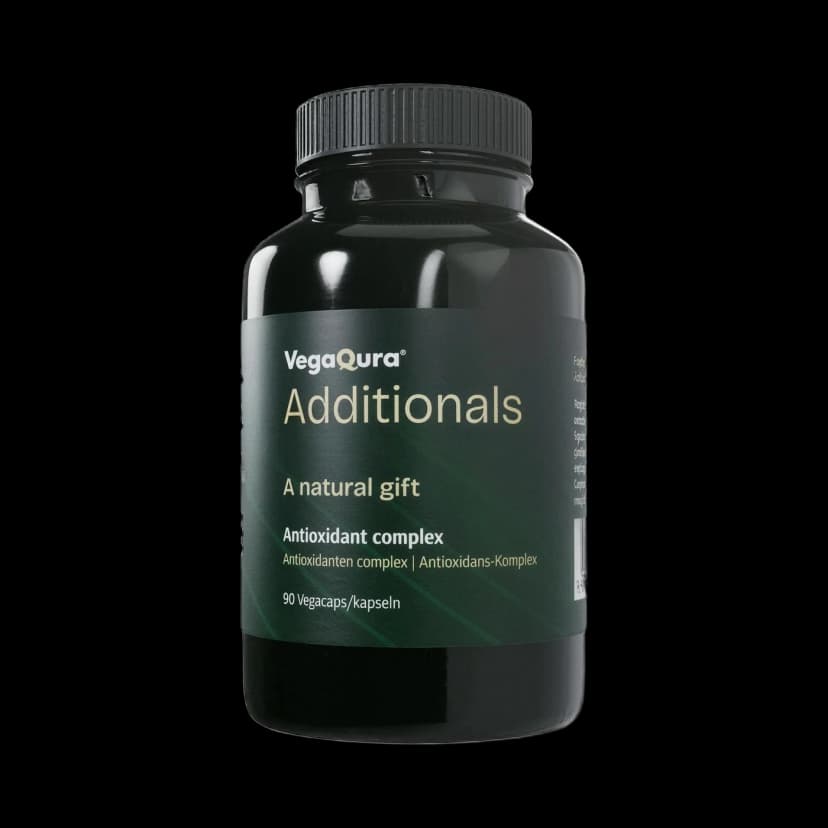
Our VegaQura Antioxidant Complex takes the whole-food route: a broad blend of fruit, vegetable and berry antioxidants in vegan capsules, made to pair with the Balance Vitalizer.
Frequently asked questions
- Are free radicals always bad?
- No — in small amounts they play useful roles in cell signalling and immune defence. Problems arise from a lasting imbalance, not from their mere existence.
- Which foods are highest in antioxidants?
- Berries, pomegranate, dark leafy greens, tomatoes (lycopene), nuts, green tea and colourful vegetables in general.
- Can I take antioxidants every day?
- Antioxidant complexes are designed for daily use as part of a balanced routine. Follow the label dose and see them as a complement to — not a replacement for — a varied diet.